

Essential Techniques Every Professional Should Know in Metal Fabrication and Welding
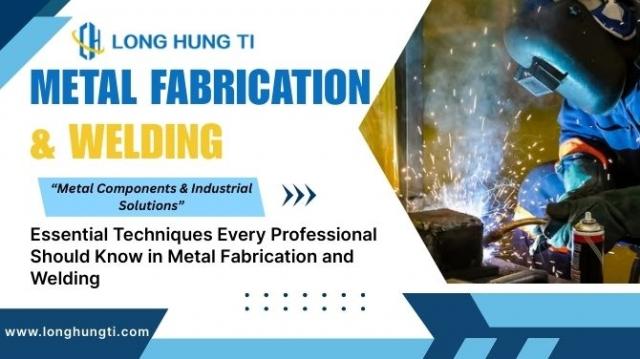
As industries continue to demand higher precision, stronger joints, and more efficient production methods, the importance of mastering metal fabrication and welding techniques cannot be overstated. These processes are not only about joining metals but also about shaping, cutting, and preparing materials to meet exact specifications and performance criteria.
At Shen Zhen Long Hung Titanium Ltd., we recognize that the foundation of producing high-quality titanium fasteners and components lies in the expertise of skilled fabricators and welders. Whether working with traditional steels or advanced materials like titanium alloys, professionals must be adept at a variety of techniques to ensure optimal results.
Key Metal Fabrication Techniques Every Professional Should Know:
1. Cutting Techniques
Cutting is often the first step in metal fabrication, and precision here sets the tone for the entire manufacturing process. Common cutting methods include:
- Laser Cutting: Offers high precision and clean edges, ideal for complex shapes and thin materials.
- Plasma Cutting: Suitable for thicker metals, plasma cutting uses ionized gas to melt and blow away metal.
- Waterjet Cutting: Uses high-pressure water mixed with abrasive materials to cut metals without heat distortion.
- Shearing and Sawing: Mechanical methods for straight cuts, often used for initial stock preparation.
Each method has its advantages depending on material type, thickness, and desired finish.
2. Bending and Forming
Bending and forming shape metal sheets or plates into desired angles and curves. Techniques include:
- Press Brake Bending: Uses a press brake machine to bend metal at precise angles.
- Roll Bending: Rolls metal sheets into cylindrical or conical shapes.
- Stretch Forming: Stretches metal over a form to create complex curves.
Proper technique ensures structural integrity and dimensional accuracy.
3. Joining and Assembly
Beyond welding, joining techniques such as riveting, bolting, and adhesive bonding are also essential in metal fabrication. Understanding when and how to use these methods is critical for design flexibility and performance.
Essential Welding Techniques for Professionals
Welding is a core skill in metal fabrication, and mastering various welding methods allows professionals to tackle diverse projects.
1. TIG Welding (Gas Tungsten Arc Welding)
TIG welding is prized for its precision and control, making it ideal for thin materials and critical joints. It is especially important when working with titanium, as it produces clean, strong welds with minimal contamination.
2. MIG Welding (Gas Metal Arc Welding)
MIG welding is faster and easier to learn, suitable for thicker materials and high-production environments. It provides good penetration and is widely used in the automotive and construction industries.
3. Stick Welding (Shielded Metal Arc Welding)
Stick welding is versatile and effective for outdoor or heavy-duty applications. It is less sensitive to contaminants but requires more skill to produce clean welds.
4. Spot Welding
Common in sheet metal fabrication, spot welding joins overlapping metal sheets by applying pressure and electric current at specific points.
Special Considerations for Welding Titanium
Titanium's unique properties require specialized welding techniques:
- Inert Gas Shielding: Titanium must be welded in an inert atmosphere (usually argon) to prevent oxidation and contamination.
- Cleanliness: Surfaces must be meticulously cleaned to avoid weld defects.
- Heat Control: Precise heat input is necessary to prevent warping and maintain mechanical properties.
Professionals working with titanium must be trained in these specific requirements to ensure weld quality.
Safety Protocols in Metal Fabrication and Welding
Safety is paramount in any fabrication and welding environment. Key safety practices include:
- Personal Protective Equipment (PPE): Use of helmets, gloves, aprons, and eye protection.
- Ventilation: Proper ventilation to avoid inhaling harmful fumes and gases.
- Fire Prevention: Keeping flammable materials away and having fire suppression systems in place.
- Training: Regular safety training and adherence to OSHA or relevant standards.
Quality Control and Inspection
Ensuring the quality of fabricated and welded components involves:
- Visual Inspection: Checking for surface defects, cracks, or incomplete welds.
- Non-Destructive Testing (NDT): Techniques like ultrasonic testing, X-rays, and dye penetrant testing are used to detect internal flaws.
- Dimensional Verification: Using precision measuring tools to confirm tolerances.
At Shen Zhen Long Hung Titanium Ltd., rigorous quality control ensures every product meets or exceeds customer expectations.
Why Choose Shen Zhen Long Hung Titanium Ltd. for Metal Fabrication and Welding?
With decades of experience, Shen Zhen Long Hung Titanium Ltd. combines advanced metal fabrication and welding techniques with cutting-edge technology to deliver precision titanium components. Their commitment to quality, innovation, and customer satisfaction makes them a trusted partner across industries.
Conclusion
Mastering essential techniques in metal fabrication and welding is critical for professionals aiming to deliver high-quality, reliable, and efficient products. As materials and technologies evolve, continuous learning and adherence to best practices become indispensable.
Shen Zhen Long Hung Titanium Ltd. stands ready to support industry professionals with expertise, advanced technology, and a commitment to excellence.
Stay tuned for the full article, where we will explore these techniques in greater detail, providing practical insights and expert advice to elevate your fabrication and welding capabilities.
Frequently Asked Questions (Expanded)
Q1: What metals are commonly used in fabrication and welding?
A: Steel, stainless steel, aluminum, and titanium are among the most common metals, each requiring specific techniques.
Q2: How do I choose the right welding method for my project?
A: Consider material type, thickness, joint design, and production volume when selecting a welding method.
Q3: What are the challenges of welding titanium?
A: Titanium's reactivity requires inert gas shielding and strict cleanliness to avoid contamination.
Q4: How can I improve my metal fabrication skills?
A: Continuous training, hands-on practice, and staying updated with industry advancements are key.
Q5: What quality standards should I expect from a metal fabrication and welding company?
A: Look for ISO certifications, adherence to industry codes, and comprehensive inspection protocols.